Chain Link Fence Standards
A Portland Metro Homeowner-Friendly Guide
What do “chain link fence standards” actually cover?
When people say “chain link fence standards,” they’re usually talking about a mix of local codes, HOA rules, manufacturer specs (materials & installation), and best practices. They ensure your fence is safe, durable, and looks the way you expect. Around the Portland metro, rain, moss, occasional freeze/thaw, and wind all influence material choices and how deep posts should be set.
How tall can a chain link fence be?
Height limits and setback rules vary by city and county, but a few patterns are common:
- Front yards: Often limited to a lower height (frequently 3–4 feet) to protect visibility near sidewalks and driveways.
- Side/back yards: Commonly allow taller fences (often up to ~6 feet).
- Corner lots & driveways: “Sight triangle” rules may require extra visibility.
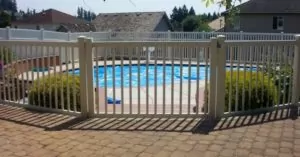
- Pools, schools, special uses: May have stricter requirements and/or permits.
Best move: check your city/county website and HOA CC&Rs before committing. If you’re not sure where to start, ask your installer to flag typical limits in your area.
What are “grades,” and which do I need?
Residential vs. commercial/industrial
“Grade” reflects the strength of the fabric (mesh) and framework (posts/rails), driven by wire/gauge thickness, coating type, and post sizing.
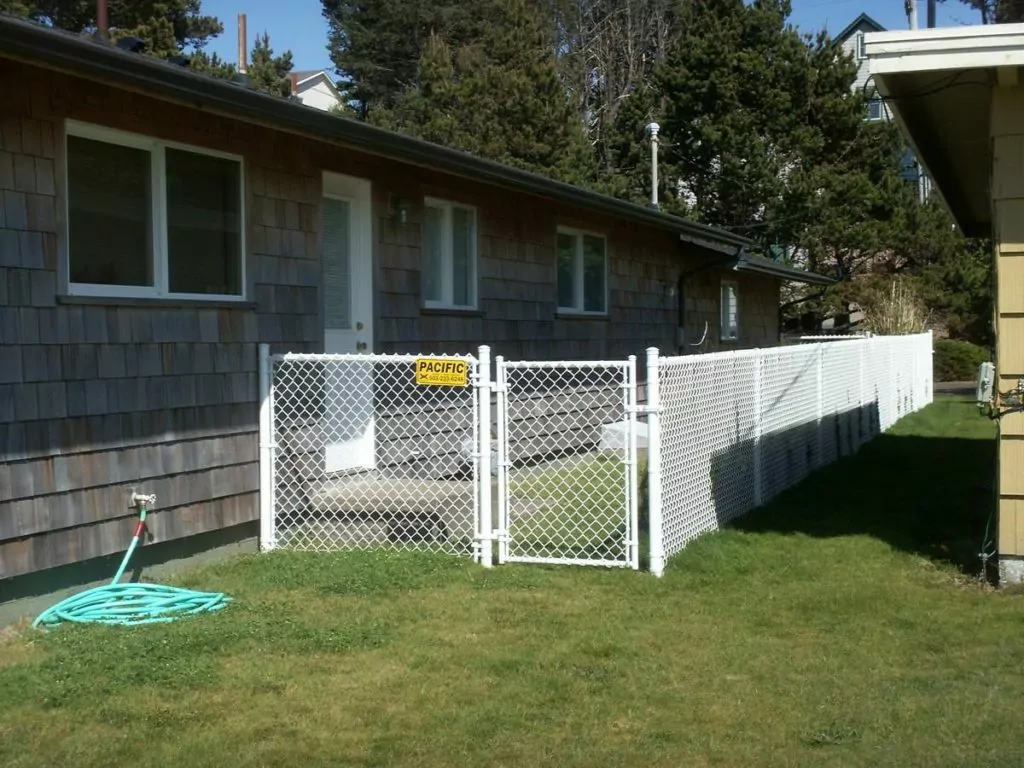
Residential grade: A solid choice for pets, kids, gardens, and property lines.
Commercial grade: Heavier fabric and framework for higher traffic and daily wear.
Industrial/athletic grade: Built for heavy use, security, and long spans.
Not sure? Tell your installer your use case (dogs that dig, sports area, storage yard). They’ll spec a grade that meets code and holds up in real life.
Gauge & Mesh Basics: Sizes and Coatings
Two specs matter most: wire gauge (thicker = stronger) and mesh size (the diamond opening). Tighter mesh improves security and ball containment; standard mesh is fine for most homes. Most residential chain link fencing is 11 gauge (≈0.120″ wire) with a 2″ diamond mesh. That’s the “standard duty” you’ll see on a lot of Portland backyards.
Coating options (each protects metal from corrosion):
- Galvanized steel (zinc): The most common, cost-effective, and durable for Portland’s wet climate.
- Aluminized (aluminum-coated steel): Excellent corrosion resistance and a bright, clean look—popular around schools and commercial sites.
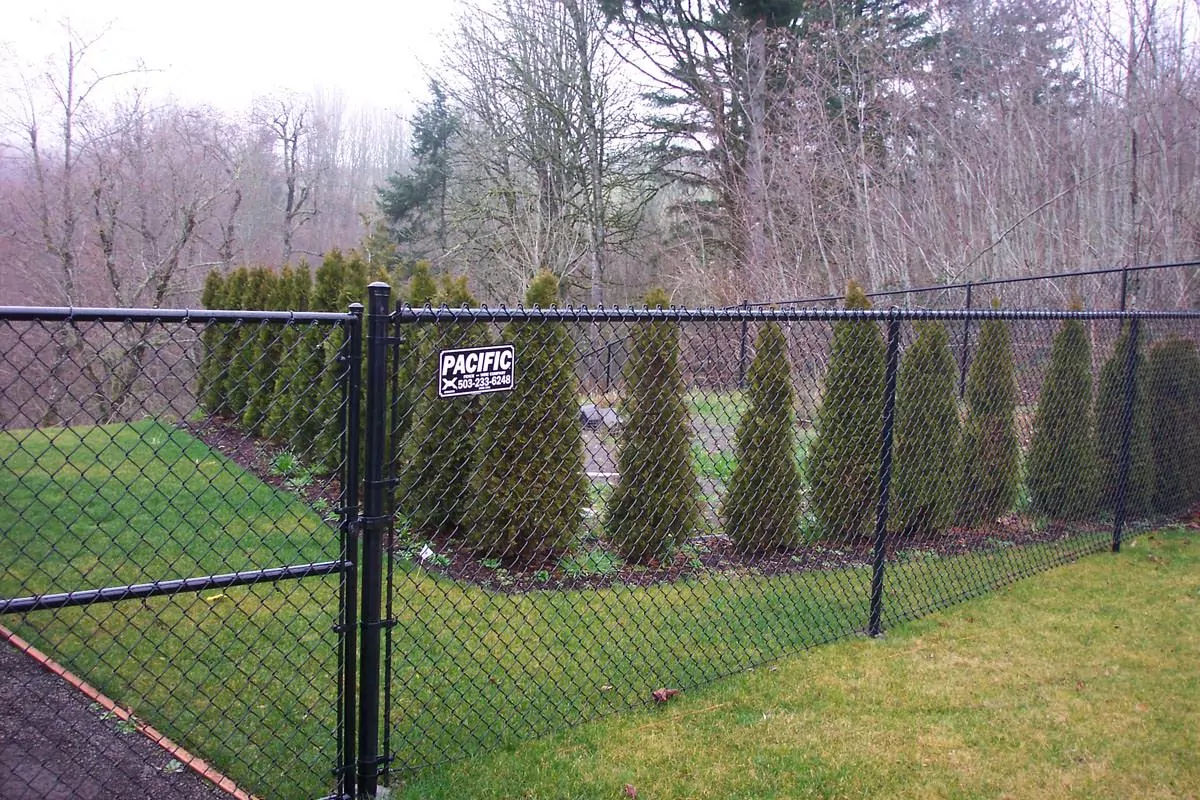
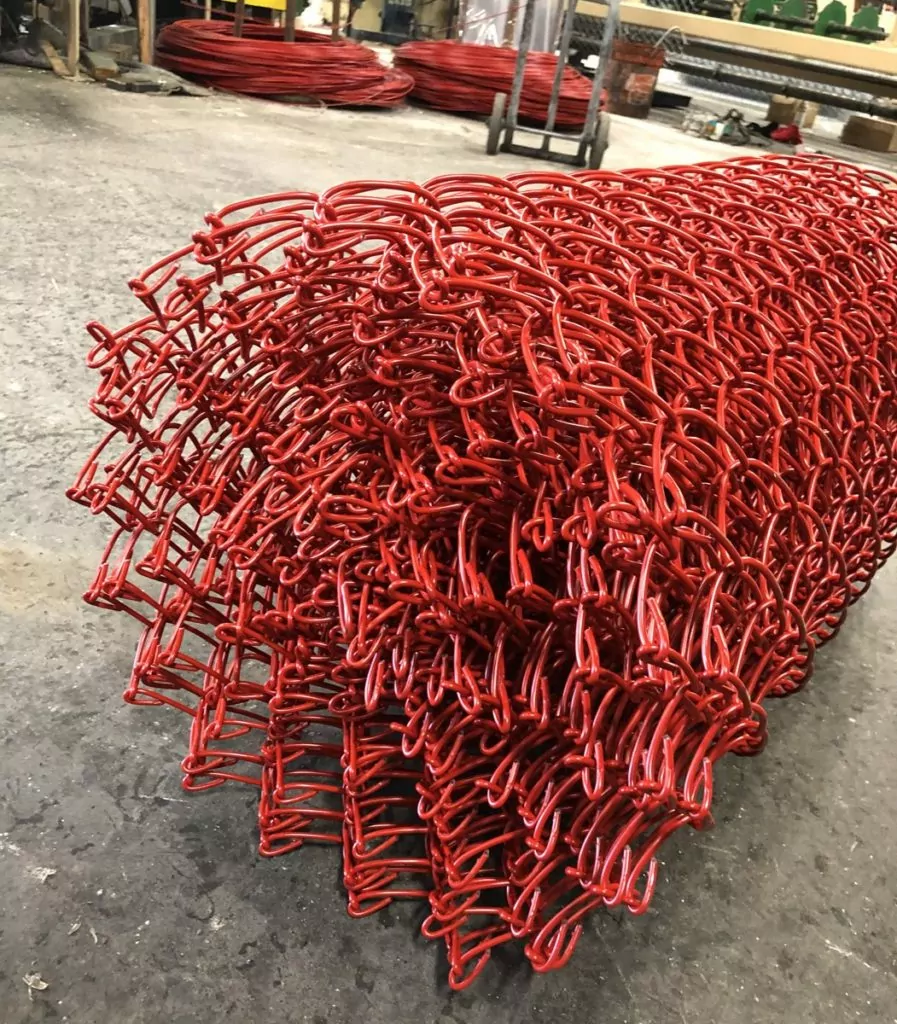
- Vinyl-coated: Adds color (black/green/blend with landscaping) and another weather barrier; great near play areas and backyards.
Legacy note: You’ll still see aluminum frameworks and aluminum-coated fabric used in corrosive environments; they’ve earned their reputation for longevity here in the Northwest.
Framework & Hardware: Posts, top rail, tension wire, and gates
Strong fabric needs a strong frame:
Posts & depth: Correct diameter/thickness and concrete footings matter, especially in wet soils. Typical post spacing is consistent; corners, ends, and gates get heavier posts. In many cases 18 inches is enough, but two feet deep will provide more strength.
Top rail vs. tension wire: A continuous top rail improves rigidity and looks clean. A bottom tension wire (or bottom rail) discourages pets from pushing under.
Gates & hardware: Quality hinges, latches, and lock hardware keep gates aligned through seasonal movement. Add mid-bracing for wide gates.
Before digging, Call 811 to mark utilities and verify property lines so your fence ends up exactly where it belongs.
Can I add privacy slats or windscreens?
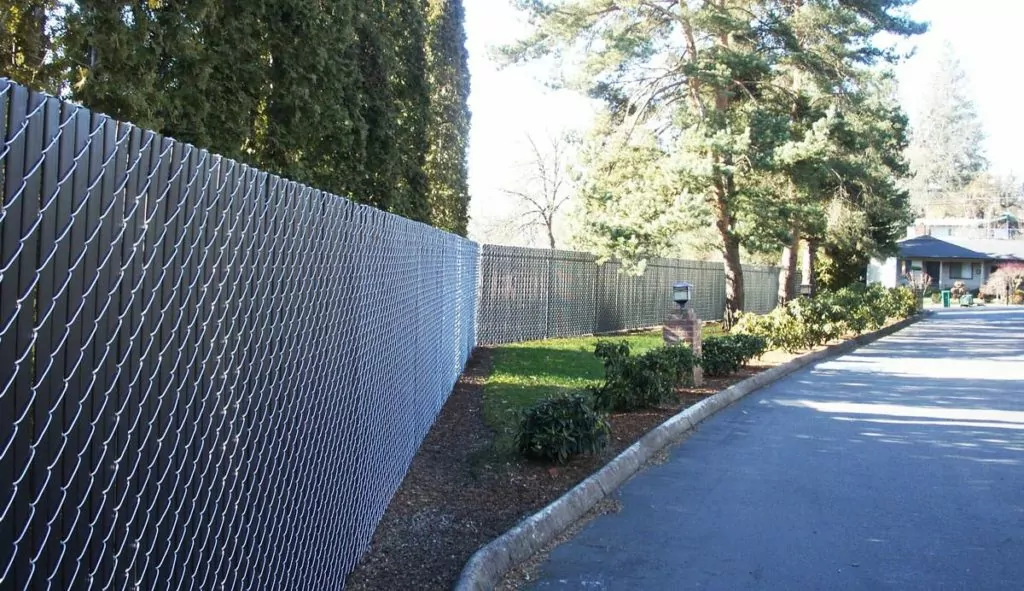
Yes, and many homeowners do. Privacy slats and windscreens reduce visibility and soften the look. But they increase wind load, which can require heavier posts/footings to meet standards. Some HOAs or jurisdictions limit slat colors or screen opacity. If you plan to add privacy, tell your installer up front so the framework is designed for it.

What does a “to-code” installation look like? (Quality checklist)
- A code-compliant, long-lasting chain link fence usually includes:
- Straight, level lines and consistent height along grade.
- Proper footings at specified depths, with posts set plumb.
- Safe edges (no sharp cut wire) and tidy terminations.
- Corrosion-resistant fasteners (galvanized steel or stainless) suited to Portland’s climate.
- Correct gate alignment with robust hinges and latches.
These details separate a “temporary barrier” from a fence that will actually stand the test of time.
Do I need a permit or HOA approval?
Often, yes, especially for corner lots, taller fences, or special uses (pools, schools, commercial). Each city in the Portland metro has its own process, and HOAs commonly have style/height rules. Good practice is to gather:
- A simple site sketch showing height, length, and location
- Notes on materials and color (galvanized, black vinyl-coated, etc.)
- Gate locations and widths
Not sure where to look? Start with your city’s planning page, then check your HOA documents. At Pacific Wire and Fence, we can help you navigate both.
How much does it cost—and how long does it take?
Price depends on length and height, grade/gauge, coating, number of gates, and site conditions (slope, tree roots, access). Vinyl-coated and heavier grades generally cost more than basic galvanized fabric.
Timelines vary with material availability and season; most residential projects install in a few days once scheduled. Clear decisions (style, color, slats, gate widths) help speed everything along.
Is chain link always the right solution?
Chain link is a workhorse: great for pet yards, gardens, side yards, sports areas, and commercial/industrial perimeters. If you want more privacy or a specific look, compare:
Cedar for warmth and full-privacy panels (with maintenance).
Vinyl for low-maintenance privacy.
Decorative wrought iron for classic, open sightlines and durability.
Chain Link Fence Standards FAQ
What height can I build in my front yard?
Front-yard heights are often lower than side/back yards—commonly around 3–4 ft to preserve visibility. Check your city’s rules and HOA guidelines.
Do I need concrete for chain link posts in Portland?
In our wet soils, concrete footings are strongly recommended for stability and longevity, and may be required by code or spec.
Which coating lasts longest here: galvanized, aluminized, or vinyl-coated?
All three perform well; aluminized and vinyl-coated provide extra corrosion protection. Vinyl also offers color options that blend into landscaping.
Are privacy slats allowed?
Often yes, but they increase wind load and sometimes face HOA or city limits. Plan for heavier posts if you want slats or windscreens.
How far apart should I set chain link posts?
Spacing is typically consistent along the run and set per grade/spec; corners, ends, and gate posts are heavier. Your installer will size spacing and footings for your site and height.
Ready for a fence that meets standards and lasts?
If you’re considering a new chain link fence, or need help decoding local standards, call Pacific Fence & Wire Co. for a friendly, no-pressure consultation and free estimate. We’ve served Portland since 1921 and build fences to look great and hold up through all four seasons.