How to Protect Your Wood Fence and Make It Last
Fence staining might sound intimidating, but it doesn’t have to be. At its core, staining a wood fence is about one thing: protecting your investment from Portland’s wet winters, bright summers, and everything in between.
A well-stained fence looks better, lasts longer, and holds up far better against moisture, sun exposure, and rot. Whether your fence is brand new or showing its age, understanding how fence staining works and when it makes sense can save you time, money, and frustration down the road.
This guide breaks fence staining down into simple, homeowner-friendly terms, covering everything from cleaning and prep to timing, maintenance, and long-term care.
Fence Maintenance and Care: Why Staining Matters
Wood fences are constantly exposed to the elements. In Portland, that usually means rain, damp air, moss growth, and seasonal sun exposure that can dry out and weaken wood fibers.
Fence staining acts as a protective barrier. Instead of water soaking into the boards, stain helps repel moisture while still allowing the wood to breathe. This balance is especially important for cedar fences, which naturally resist decay but still benefit from added protection.
Regular fence maintenance, including staining, helps:
- Slow down rot and warping
- Reduce cracking and splitting
- Protect against UV damage
- Keep your fence looking clean and consistent
Without maintenance, even a high-quality fence can start to gray, soften, or deteriorate faster than expected.
How to Clean a Fence Before Staining
Cleaning your fence is not optional. Staining over dirt, mildew, or moss will prevent the stain from soaking in properly and shorten its lifespan.
Start by removing surface debris like leaves, cobwebs, and loose dirt. From there, most Portland homeowners choose one of two options: a gentle pressure wash or a manual scrub using a fence-safe cleaning solution.
A light pressure wash can be very effective when done carefully. The goal is to clean the surface, not to strip or damage the wood. Too much pressure can scar the boards and create uneven absorption later.
After cleaning, the fence must dry completely. In Portland’s climate, that often means waiting several dry days. If the wood still feels damp, it’s too soon to stain.

How Often Should You Stain Your Fence?
There’s no single answer, but most wood fences in the Pacific Northwest benefit from staining every two to three years. Weather exposure, sun direction, and stain quality all play a role.
South-facing fences tend to fade faster due to sun exposure. Areas near sprinklers or shaded spots that stay damp may need attention sooner. A simple test is to sprinkle water on the wood, if it soaks in quickly instead of beading up, it’s time to re-stain.
Annual inspections help catch early signs of wear so small touch-ups can be done before full re-staining becomes necessary.
Fence Staining vs. Painting: Which Is Better?
Homeowners often ask whether painting a fence is a good alternative to staining. While paint can look nice initially, stain is almost always the better choice for wood fencing.
Stain penetrates the wood instead of sitting on top of it. That means it won’t peel, bubble, or crack the way paint often does, especially in wet climates like Portland.
Paint also traps moisture inside the boards, which can accelerate rot. Stain allows moisture to escape while still offering protection, making it far more forgiving over time.
For fences, stain isn’t just easier to maintain, it’s smarter.
Choosing the Right Fence Stain
Not all stains are created equal. Cheaper products may look fine at first but often fade or fail within a couple of years, requiring frequent reapplication.
A high-quality fence stain should include:
- UV protection to slow sun damage
- Fungicides to resist mildew and mold
- Proper pigmentation for even coverage
Stains generally fall into three categories: semi-transparent, penetrating, and solid. Semi-transparent stains highlight wood grain, while more pigmented options provide deeper color and added UV resistance.
Testing a small sample on your fence before committing is always a good idea. Wood tone, age, and texture can all affect the final look.
The Best Time of Year to Stain a Fence in Portland
Timing matters more than many homeowners realize. In Portland, early summer and late summer are typically the best windows for fence staining.
You’ll want a stretch of dry, mild weather, both before and after staining. The wood must be completely dry before application, and the stain needs time to cure without rain.
Cloudy days, early mornings, or late afternoons are ideal. Direct sunlight can cause stain to dry too quickly, leading to uneven absorption.
Always follow the stain manufacturer’s temperature and weather recommendations, especially in Oregon’s unpredictable climate.

How Fence Staining Is Typically Applied
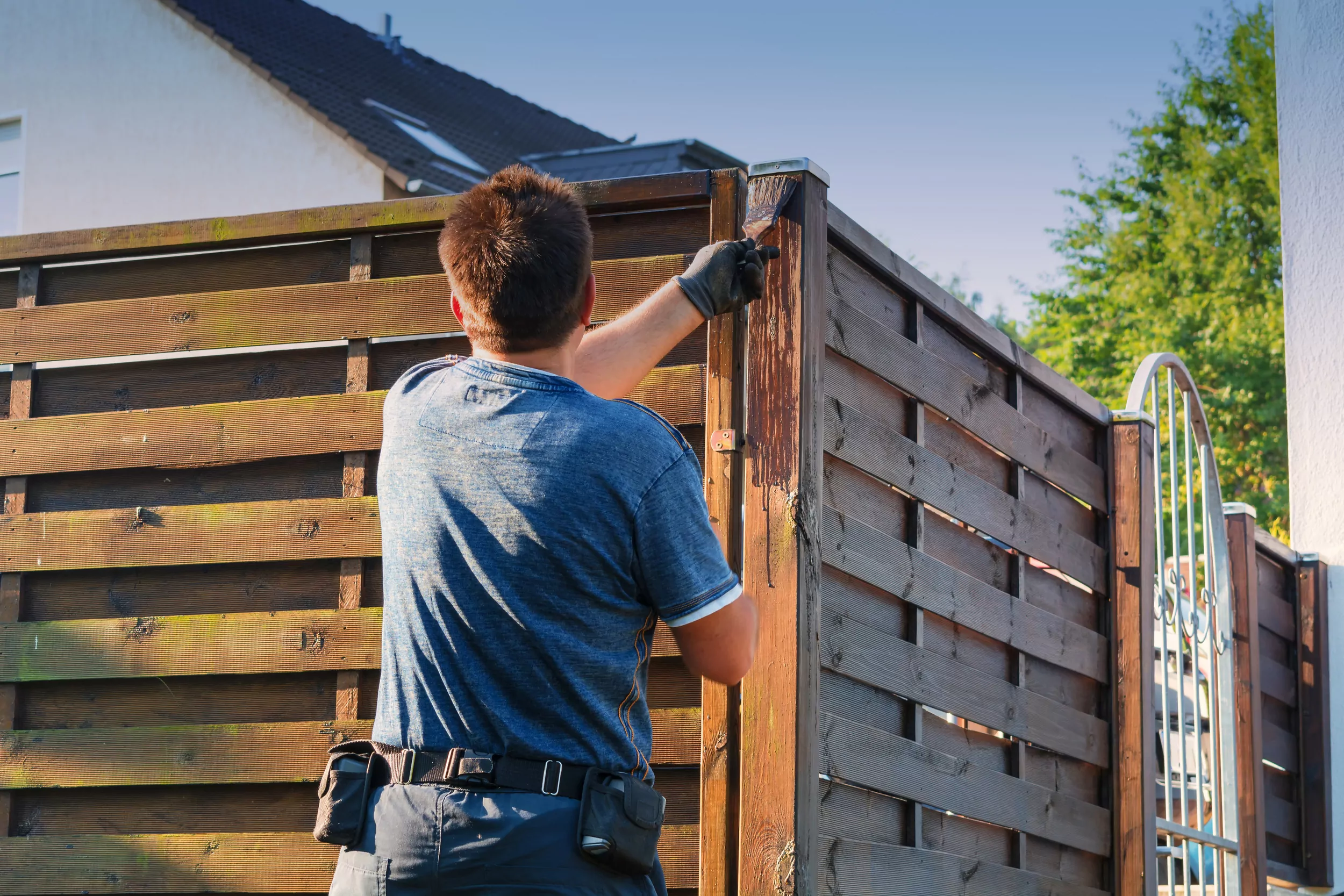
Fence staining doesn’t require fancy tools or professional equipment, but using the right approach makes a noticeable difference in how long the stain lasts and how even the finished fence looks. Most homeowners rely on a simple combination of rollers and brushes, which offers good control and helps work stain into the wood where it matters most.
For longer fence lines or larger properties, a sprayer can speed things up. Sprayers apply stain quickly and evenly, but they still require back-brushing afterward. Brushing over sprayed stain helps push the product into seams, knots, and edges, which improves absorption and reduces patchy areas once the fence dries.
No matter the tools used, the application should always move from the top of the fence downward. Starting at the top helps prevent drips from running over finished sections and keeps coverage consistent from board to board. Working in small sections, rather than trying to stain an entire side at once, makes it easier to maintain an even finish and catch missed spots early.
Stain should be applied generously enough to soak into the wood, but not so heavily that it pools or runs. The goal is penetration, not surface buildup. If the stain begins to drip or collect at the base of the boards, it’s a sign that too much product is being applied at once.
Corners, edges, and joints deserve extra attention. These areas absorb moisture more easily and are often the first places to show wear. Taking time to brush stain into these spots helps protect the fence where it’s most vulnerable and leads to longer-lasting results overall.
Tips for Maintaining a Wooden Fence to Prevent Rot and Damage
Staining is only part of good fence care. Simple habits can dramatically extend your fence’s lifespan.
Keep soil and mulch from piling up against fence boards. Make sure sprinklers aren’t constantly soaking the same areas. Trim plants and vines that trap moisture against the wood.
Once a year, walk the fence line and look for soft spots, loose boards, or early signs of rot. Addressing small issues early prevents larger repairs later.
What to Do With an Old Wooden Fence
Sometimes, no amount of stain can save a fence that’s structurally compromised. When boards are breaking, leaning, or unable to withstand storms, replacement is often the safest option.
That said, old fence wood doesn’t have to go to waste. Many homeowners repurpose boards into planters, garden trellises, small benches, or rustic décor. Recycling materials responsibly helps reduce waste while giving old wood a second life.
Frequently Asked Questions About Fence Staining
How long should fence stain last in Portland?
Most quality stains last two to three years, depending on exposure and maintenance.
Can I stain a fence right after installation?
It’s best to wait several weeks so the wood can acclimate and dry properly.
Do I need to pressure wash before staining?
Cleaning is essential, but pressure washing should be done carefully to avoid damaging the wood.
Is fence staining messy?
With proper prep and drop protection, staining is manageable and controlled.
Should I hire a professional to stain my fence?
For large fences or uneven terrain, professional staining ensures consistent results and saves time.
Fence Installation and Repair in Portland
Fence staining helps protect your fence, but when repairs or replacement are needed, experience matters.
Pacific Fence & Wire Co. has been serving Portland and the Pacific Northwest since 1921. From fence installation to removal and replacement of aging wooden fences, our team brings decades of hands-on expertise to every project.
If your fence needs more than maintenance, we’re here to help you design and build a durable solution that fits your property and Portland’s climate.