

Choosing between a chain link fence vs wood fence usually comes down to one question: what do you need the fence to accomplish on your property? If affordability and minimal maintenance are your priorities, chain link is the clear winner, while homeowners who value privacy and a warm, finished appearance usually prefer wood.
Below, we compare both materials across the factors our customers ask about most often, based on more than a century of installing fences throughout the Portland area.
Chain Link vs Wood at a Glance
| Factor | Chain Link | Wood (Cedar) |
|---|---|---|
| Upfront cost | Lower | Higher |
| Maintenance | Very low | Moderate (cleaning and sealing) |
| Durability in wet weather | Excellent with galvanized or vinyl coating | Good with cedar and proper care |
| Privacy | Low (high with slats) | High |
| Security | Strong | Moderate |
| Visibility through the fence | Full | None |
| HOA approval | Often restricted in visible areas | Usually allowed |
| Best for | Budget projects, pets, commercial and agricultural sites | Backyard privacy and curb appeal |
Cost Comparison: Chain Link Wins
Is chain link cheaper than wood? In almost every situation, yes, because chain link is one of the most economical fence types available, both for materials and for installation labor.
Several factors explain the difference. Chain link fabric arrives in long rolls that installers can stretch into place quickly, the framework uses lightweight galvanized steel, and there are far fewer individual components to measure, cut, and fasten than on a board-by-board wood fence. Fewer materials and a faster installation translate directly into a lower total price.
The savings also grow over time. A wood fence requires regular cleaning, staining, or sealing to maintain its appearance and reach its full lifespan, while chain link needs little more than an occasional rinse with a garden hose. Once you account for maintenance over the life of the fence, the cost difference between the two materials becomes even more significant.
A few things can narrow the price difference:
- Vinyl-coated chain link in black or green costs more than standard galvanized, though it is still typically less than cedar.
- Taller fences and heavier gauges for commercial or security projects raise the price of chain link.
- Simple wood designs on a short, flat run can come closer to chain link pricing than a tall privacy fence with decorative trim.
Your total investment depends on fence length, height, gate quantity, and the terrain on your property. The quickest way to compare realistic pricing for your yard is our Instant Estimate tool, which gives you a ballpark price for both materials in a few minutes.
Durability in Oregon’s Climate
Portland’s long, wet season is the biggest challenge any fence faces in our region. Persistent rain, creeping moss, and months of saturated soil are hard on exterior building materials, and this is where the differences between chain link and wood become most noticeable.
Chain link handles moisture very well. Galvanized chain link is coated with zinc, which protects the steel from rust. Vinyl-coated chain link adds a second layer of protection on top. Moss has little to grip on an open mesh, and there are no boards to soak up water, so a well-installed chain link fence can last for decades with almost no attention.
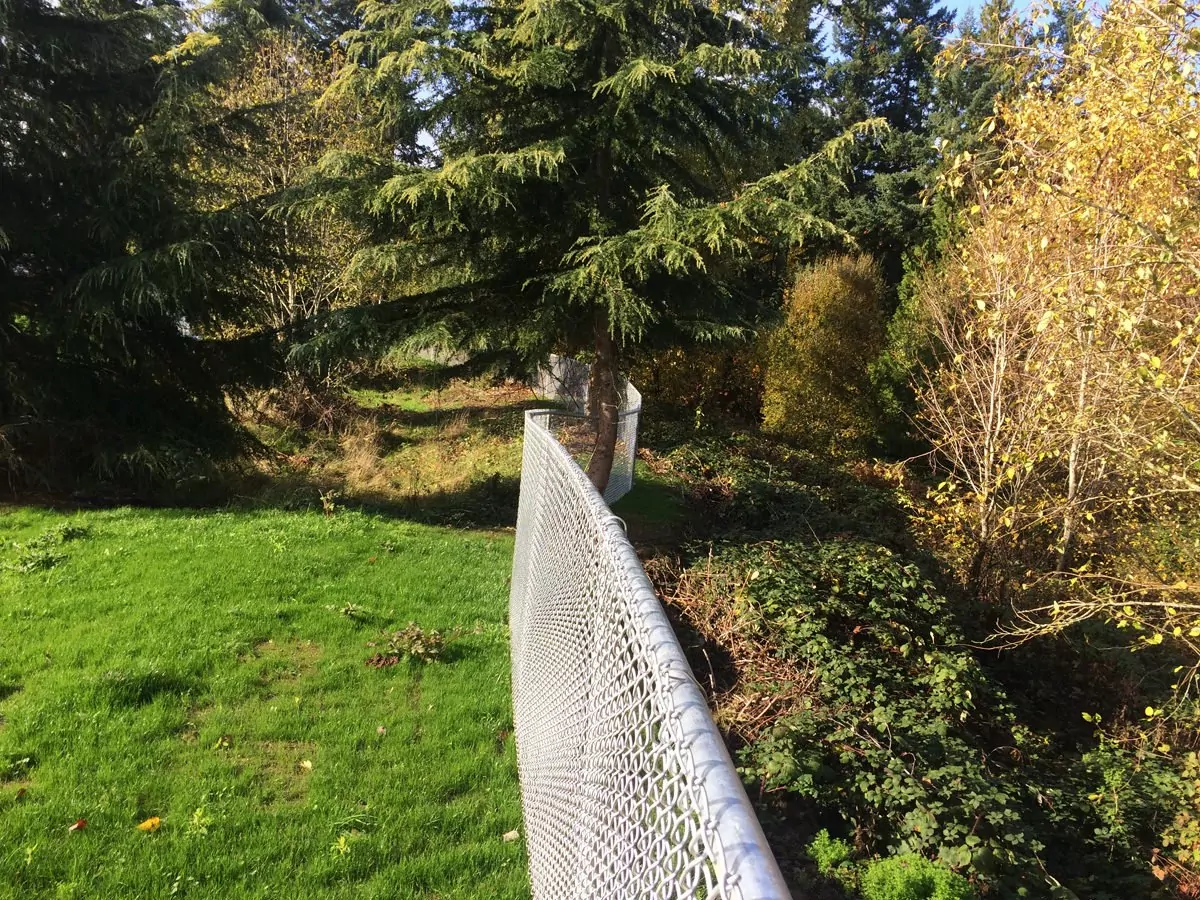
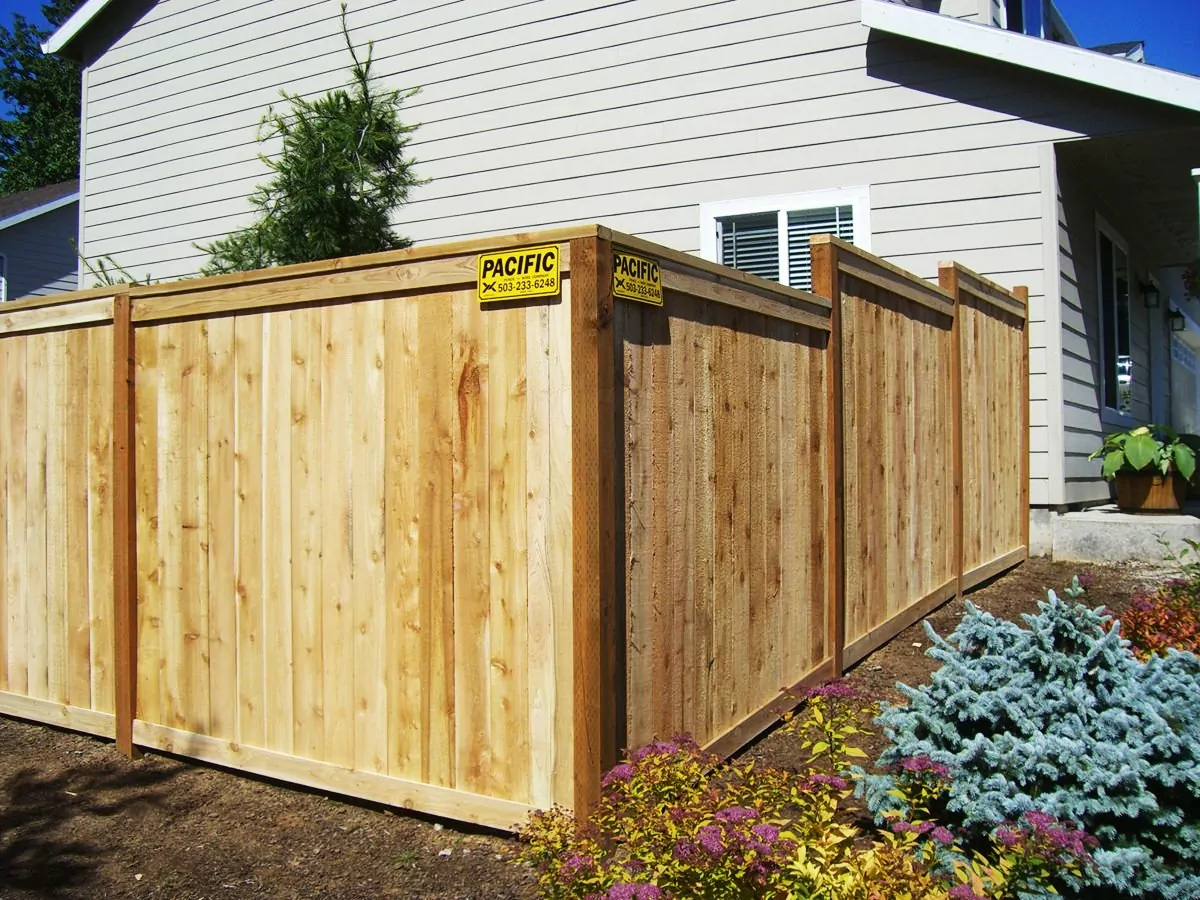
Wood takes more care in our climate. Cedar is the best wood choice for the Pacific Northwest because it naturally resists rot and insects. Even so, constant moisture takes a toll. Boards near the ground can soften over time, moss and mildew can build up on shaded sections, and untreated wood will gray and weather. With routine cleaning to remove mold and moss and resealing every couple of years, a quality cedar fence can last 20 years or more.
One upgrade that helps wood fences last longer is using steel posts instead of wood posts. Our lifetime steel posts will not rot at the ground line, which is where most wood fences fail first.
Privacy Comparison
For privacy, wood is the obvious winner. A solid cedar fence blocks sightlines completely, creating a secluded backyard where you can relax without neighbors or passing traffic looking in. It also reduces street noise slightly and conceals garbage containers, equipment, and utility areas from view.
Standard chain link, by contrast, provides almost no privacy. The open mesh allows light and air to pass through freely, which is excellent for maintaining an open atmosphere or supervising children and pets from across the yard, but it does nothing to obstruct the view.
However, you do not necessarily have to choose one or the other, since chain link can gain considerable privacy with slats, as explained in the hybrid section below.
Security Comparison
When security is the primary concern, chain link has the advantage. Here is how the two materials compare, based on our experience with commercial and residential installations:
- Chain link: strong. The steel fabric is hard to cut through, and it can be built taller than most wood fences, with options like barbed wire or tighter mesh for high-security sites. Because you can see through it, intruders have nowhere to hide, which makes it easier for neighbors, staff, or cameras to spot anyone near the fence.
- Wood: moderate. A tall wood fence keeps people from seeing what is in your yard, which can discourage casual theft. However, boards can be broken or pried loose, and the solid surface can give someone cover once they are on the other side.
That explains why most businesses, storage facilities, and utility properties rely on chain link for security fencing, while homeowners focused on privacy tend to prefer wood.
HOA Rules for Each
If your neighborhood has a homeowners association, review the regulations before selecting a material. HOA guidelines vary considerably, but several patterns are common:
- Chain link is often restricted. Many HOAs do not allow chain link in front yards or other areas visible from the street. Some ban it entirely, while others permit it only in black or green vinyl coating, or only in backyards.
- Wood is usually allowed, with limits. Wood privacy fences are widely accepted, but HOAs often set rules on height, board style, stain color, and which side of the fence faces the neighbor.
- Approval is usually required either way. Most associations want to see your plans before work starts.
Review your CC&Rs or request the fence guidelines from your HOA board before requesting a quote, and we will gladly build to whatever specifications your association requires.
Best Use Cases: Residential, Commercial, and Agricultural
Each material performs best in particular applications. Here is how we typically match them to different property types.
Residential
- Choose wood for backyard privacy, curb appeal, and outdoor living spaces. Learn more about our cedar fence installation.
- Choose chain link for side yards, large lots on a budget, and dog enclosures where you want to keep an eye on your pets.
Commercial
- Chain link is the standard for commercial fencing, including warehouses, construction sites, storage lots, schools, and sports fields. It is durable, secure, and cost-effective over long distances.
- Wood works well for dumpster enclosures, screening, and customer-facing areas where appearance matters.
Agricultural
- Chain link is a solid choice for equipment yards, kennels, and small animal pens.
- Wood fits pasture boundaries and ranch-style designs. See our agricultural fencing options for livestock and acreage.
Hybrid Option: Chain Link With Privacy Slats
If you appreciate the affordability and durability of chain link but want additional privacy, slats offer a practical compromise. Privacy slats weave vertically or diagonally through the chain link mesh and block most of the visibility through the fence. They are available in a variety of colors and styles, including textured options designed to resemble natural wood.

Slats are a great fit when you:
- Want to add privacy to an existing chain link fence without replacing it
- Need to screen a commercial property, equipment yard, or dumpster area
- Want a low-maintenance fence with more privacy than open chain link
We carry Advantage slats and Arrowlock privacy slats, and you can see finished installations in our chain link slats gallery. For more ideas, check out our guide to making a chain link fence more private.
Chain Link Fence vs Wood Fence: Frequently Asked Questions
Is chain link cheaper than wood?
Yes. Chain link is almost always less expensive than wood to install, and it costs far less to maintain over time. Vinyl-coated chain link and taller commercial fences cost more than basic galvanized chain link, but they are still typically less than a cedar privacy fence.
Which lasts longer in Oregon, chain link or wood?
Chain link generally lasts longer in Oregon’s wet climate because galvanized and vinyl-coated steel resist rust and do not absorb water. A well-maintained cedar fence can last 20 years or more, but it needs regular cleaning and sealing to get there.
Can I make a chain link fence private?
Yes. Privacy slats weave into the mesh to block most of the view, and they come in colors and wood-look styles. You can add slats to a new fence or to an existing one.
Is chain link or wood better for dogs?
Both materials work well for dogs. Chain link is durable, affordable, and lets you supervise your pet, while a solid wood fence blocks the view, which can calm dogs that react to people or animals passing by. For persistent diggers, ask about adding a barrier along the bottom of either fence.
Does my HOA allow chain link fences?
It depends on your association. Many HOAs restrict chain link in front yards or areas visible from the street, and some only allow black or green vinyl-coated chain link. Check your HOA guidelines before you plan your project.
The Bottom Line
Choose chain link if affordability, minimal maintenance, security, or visibility matter most to you. Choose wood if privacy and a natural, finished appearance are your top priorities. If you want some of the benefits of both, chain link with privacy slats provides a practical middle path.
Pacific Fence & Wire has been building both types of fence in the Portland area since 1921, and we even weave our own chain link in-house. If you are still deciding, our team can walk your property with you and recommend the right fit. Start with a free estimate by calling (503) 233-6248 or using our Instant Estimate tool.